KORT OPPSUMMERING AV SITUATIONEN I FUKUSHIMA, JAPAN

2013: APOKALYPSEN FORTSÄTTER i FUKUSHIMA, JAPAN March 2011 med 3 katastrofer:

JORDBÄVNING på 9.1, - utplånade TSUNAMI + KÄRNKRAFTHAVARI - Information hälls tillbaka,”..för att förhindra panik.”

Hela Japan förflyttades 2 meter, Byen Sendai 7 meter! Thernobyl var EN reactor - Fukushima är FYRA.

“THE ONGOING NUCLEAR CATASTROPHE IN JAPAN IS VERY SERIOUS, BUT IT IS PART OF A MUCH LARGER DRAMA. IN THE PAST, ONE WOULD HAVE SPOKEN OF AN ACT OF GOD’, WHICH IS JUST ANOTHER WAY OF SAYING THAT MANKIND IS NOT THE MASTER OF EVERYTHING. Bertrand Barré, AREVA

Viser innlegg med etiketten Japan. Vis alle innlegg

torsdag 28. november 2013

Secrecy law approved in Japan — Fear Fukushima cover-ups to worsen- approved by US


Japan Parliament and prime minister Shinzo Abe. Photographer: Haruyoshi Yamaguchi/Bloomberg


Japan’s more powerful lower house of Parliament approved a state secrecy bill late Tuesday [...] 
Critics say it might sway authorities to withhold more information about nuclear power plants [...] 
The move is welcomed by the United States [...] 
lawyer Hiroyasu Maki said the bill’s definition of secrets is so vague and broad that it could easily be expanded to include radiation data [...] 
Journalists who obtain information “inappropriately” or “wrongfully” can get up to five years in prison.

Taro Yamamoto [an upper house lawmaker] said the law threatened to recreate a fascist state in Japan. 
“This secrecy law represents a coup d’etat by a particular group of politicians and bureaucrats,” he told a press conference in Tokyo. 
“I believe the secrecy bill will eventually lead to the repression of the average person. 
It will allow those in power to crack down on anyone who is criticising them – the path we are on is the recreation of a fascist state.” 
He said the withholding of radiation data after the Fukushima disaster showed the Japanese government was predisposed to hiding information from its citizens and this law would only make things worse. [...] 
The Asahi Shimbun newspaper likened the law to “conspiracy” regulations in pre-war Japan and said it could be used to stymie access to facts on nuclear accidents.


READ MORE >> ENENEWS


torsdag 22. august 2013

Exposing Fukushima cover-up

The world has been in a collective chock after the nuclear accidents in Fukushima.  That is now beginning to lift, thank God. Main purpose, not only for the Japanese government, but also for the world politicians, has been and still are, not to create panic. In stead they should work with this as the international catastrophe it is.                         


Enenews about how media now exposing Fukushima cover-up:  Problems much worse than officials claim


BBC News, Aug 22, 2013: The “worsening situation” at Fukushima has prompted a former Japanese ambassador to Switzerland to call for the withdrawal of Tokyo’s Olympic bid. In a letter to the UN secretary general, Mitsuhei Murata says the official radiation figures published by Tepco cannot be trusted. He says he is extremely worried about the lack of a sense of crisis in Japan and abroad.

Time, Aug 22, 2013: “It’s time we faced the danger, ” said Takashi Hirose, a writer shocked by the under-reported radiation levels he found on recent trip into the evacuation zone. “So many terrible things are not being reported in the news.”
BBC News, Aug 22, 2013: Fukushima leak is ‘much worse than we were led to believe’ [...] A nuclear expert [Mycle Schneider] has told the BBC that he believes the current water leaks at Fukushima are much worse than the authorities have stated. [...] He says water is leaking out all over the site and there are no accurate figures for radiation levels. [...] some nuclear experts are concerned that the problem is a good deal worse than either Tepco or the Japanese government are willing to admit.

Irish Times, Aug 21, 2013: Cover-up [....] Many experts believe Japan’s government continues to underestimate the cost and complexity of the decommissioning, and that Tepco has been systematically covering up problems.

Bloomberg, Aug 21, 2013: At least one commissioner at the regulator questioned the accuracy of data being released by operator Tokyo Electric Power Co. (9501) and whether the incident had been fully reported. […] “This INES evaluation is based on the 300-ton leak, but I really wonder if we can trust data provided by Tepco,” Toyoshi Fuketa, a commissioner at the NRA, said at a meeting in Tokyo today. “I really wonder if we should judge based on Tepco’s data.”


SEE ALSO  
>>>   "You Don't Fight a War on a Budget"

>>>   "Fukushima 2 years after: What did They Knew and When" / "Fukushima 2 år efter: Vad visste de och när"
 (Both in Swedish and English) 


tirsdag 20. august 2013

Japan Earth quake also Triggered Waves in Norway

The Aurland-Flåm fjord in Norway, where the 2011 Japan earthquake triggered seiche waves. Leif Hauge.

In fjords pointed northeast, the S-waves from the Japan earthquake moved the ground back and forth by 0.4 inches (1 centimeter), Bondevik, a tsunami expert, said.
"You can move a lot of water just by pushing one centimeter of ground".
The waves measured nearly 5 feet (1.5 meters) from trough to crest (their lowest to highest point). No damage was reported, however. "Luckily, they happened at low tide".

Bondevik was called on by local media to explain the source of the surge. Bondevik said he first thought an underwater landslide generated the waves. "They looked like tsunamis," he said. But as the day wore on, more reports of coastal flooding came in from faraway fjords, blowing a hole in his landslide theory.
"Later in the evening I realized there must be a connection with the big earthquake in Japan," Bondevik told LiveScience. "I was so excited I couldn't sleep that night thinking about it."

"Norway's weird waves traced to Japan quake" , Becky Oskin, LiveScience

fredag 19. juli 2013

YOU DON’T FIGHT A WAR ON A BUDGET


"The Japanese should fight this as a war,


and you don’t fight a war on a budget"


Arnie Gundersen’s new video update is a discussion with Akio Matsumura on today’s biggest dangers at Daiichi Nuclear Power Plant in Fukushima, July 2013 

40 good years and 1 bad day..

Akio Matsumura says the accident has raised enormous issues that the world has never experienced. Tepco cannot handle this magnitude of a catastrophe alone. He has worked to make the government listen to make independent international team to go in and try solve the huge problems at Fukushima Daichii, and minimize the radiation to the Japanese people.

It does not exist today an independent organization. IAEA (International Atomic Energy Agency) claim to be that, but is also promoting nuclear power (article 2 in their charter), and that cannot be independent..

Nuclear power is big business, and today, money goes before human heath and lives.


We must continue to study and bring wisdom of international team together. Please help Japan – and the world.


The biggest dangers at the NPP (nucear power plant) today are:

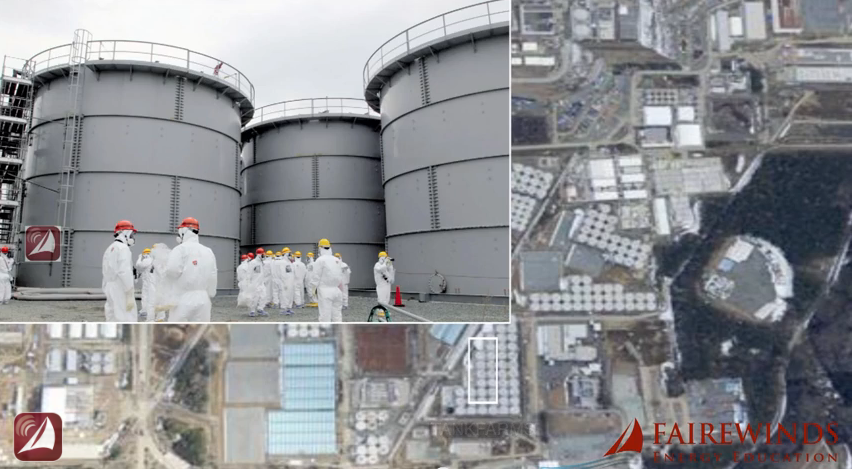
1    1. An earthquake that causes the water tanks to leak.


Enormously radioactive water is stored in 700 huge tanks. They don’t let us know exactly what is in them. The decay of the radioactive material in those tanks releasing very high quantities of x rays off site.

If there is an earthquake, none of them  are seismically qualified.

Release of this into the pacific Ocean is more than what has already been released.


    2. The structural condition of nr 4.

Reactor 4 has most fuel, and hottest fuel. Loss of fuel cooling, can still lead to a fuel pool fire. This will contaminate a huge part of the country, including Tokyo. 


In my opinion that means evacuation of over 30 million people. Nothing is prepared to meet this treat, because it is looked upon as impossible.

I don’t think we are allowed to think like this.

In the Book of Exodus in the Bible,  the Israeli people was able to escape from Egypt with 2-3 mill people and loads of animals. On foot. With the transport technology we have today, we should be able to help more people out of Japan than escaped from Egypt..

Japan is a huge island. It should be surrounded by big cargo ships until this treat is under control.

But a price tag is set on human lives that the world leaders are not willing to pay.


It’s a question of economy. Neither Tepco (Tokyo Electric Company, running the plant) or the Japanese government want the Japanese people to know how much in debt this catastrophe has sat them.

The word leaders do not want people to know how dangerous this situation specifically, and nuclear power plants in general, are for the world. Even a knowledge of possible ruin and extinction of the planet is not enough to make them give up one single dollar in profit..


3     3. Unit 3

This unit has less fuel, but are much more damaged than unit 4. Therefore it has even less chance to withstand an earthquake.

A quake of 7.0 or higher at or near the site, is what we all pray will not occur in this area.

Japan is situated on several cracks in the earth’s crust, upon several tectonic plates.


Two big problems

Ground water is leaking into the reactors.

The devastating earth quake 11th of March 2011 made the entire Pacific side of Japan drop with 3 feet.. Japan sank down with 3 feet..

If you’re a building and the structure suddenly fall 3 feet, that makes the floor to crack. It puts more water pressure on the bottom of the building.

So water is flowing into the reactor buildings in great quantities, 400 TONS A DAY..


If the buildings had no radiation, it would be no problem, the water could flood anywhere.

But this water gets highly radioactive, and is contaminating ground water and ocean. There is no way they can contain all this water..


I remember how they tried.. This was the reason why the Tepco leader cry on TV..  He apologized for radioactive water leaking out in the sea..


The containment got holes in it, penetrations, where wires are going in and out, electric, and pipes.

The insulation on these penetrations was never designed for high radiation, high temperature – and salt water – no one ever THOUGHT they would be exposed to salt water. (salt breaks down structure).

All three things happened at Fukushima Daichii, and the penetrations have all failed.


 So the radioactivity that was supposed to be contained in the nuclear reactor, is now leaking through these penetrations, to where the water is leaking into the other buildings.

In that effect we have small pieces of nuclear fuel, powder, mixing in with the water and cover the floors in the reactor buildings.


You have two choices:

Either stop the water from going in, or stop the radiation from going out.

Both very difficult.

Nothing of this have ever been done before, nothing is described in any text book..


Stop the water from going in:

Gundersen proposed after the accident to build a trench around the site, and filing it with something called ciolite ( a volcanic material who absorbs radiation very well)

Another scientist, Japanese Dr Nakamura, suggested building wells outside that trench, to drop the water table. That would reduce the amount of water going into the reactor buildings.

If you could drop that water table, you could pump the water out in the ocean. The ceolite would filter the radiation and make the water clean.


Stop the radiation from going out:

The horse is already out of the barn..


But it’s still important to seal all those penetrations that are leaking – find the leaks and plug them.

Extremely high and deadly, or near deadly radiation makes this difficult..

There’s a priority to get the fuel out of those reactors.. but that high radiation makes it extraordinary difficult.

Best solution concerning the 400 tons of water going in every day, is to lower the ground water table and prevent further water to go in.


From the earliest days we knew..  that the biggest concern is that any accident at Fukushima Daichii that will cause high and lethal releases of radioactivity, will make further work on the plant impossible. It will be abandoned, and  maybe even also on the nearby plant, Fukushima Danii. This will have an impact on the whole world, especially on the northern hemisphere.

You can see Arnie Gundersen's new update video on Fukushima
"Forty Good Years and One Bad Day"   >>> HERE

All pictures in this article is from Arnie Gundersen's update video.
Get more information at Arnie Gundersen's excellent web site:
Fairewinds Energy Education


See also: "Fukushima: Unstable and a strategic disaster"


søndag 2. desember 2012

Förutsäger tsunamin och härsmältor!

I denna mäktiga teaching på Lucas 21, visar Joseph Prince hur ord i den grekiska texten förutsäger tsunamin och härsmältor i Japan.

Frykt inte, Jesus har lovat att skydda dig!
 Viktigare än oroa för radioaktivitet i maten, är att fortsätta gå till Nattvärden, måltiden som Jesus innstiftade.
Gå och fråga kyrkan där du bor!


Joseph Prince:  Gods Glory unveiled in the last days -  från 20 March 2011 

tirsdag 10. juli 2012

Härsmältan människoskapad (VIDEO)


Arnie Gundersen samtalar om hur en japansk undersökning visar hur härsmältan på Fukushima Daiichi var människoskapad - som kunde och skulde ha varit undvikit. i USA fnns 23 reaktorer med liknande design som de på Fukushima.

Video utskrift:
Juan Gonzalez: We begin today’s show in Japan, where a new parliamentary inquiry has concluded last year’s nuclear meltdown of the Fukushima Daiichi nuclear power plant could have been prevented. The investigating commission appointed by the Japanese Diet concluded, quote, "It was a profoundly man-made disaster—that could and should have been foreseen and prevented." The commission held the government, regulators and a nuclear operator responsible for the triple meltdown that occurred in March 2011 after a powerful earthquake and tsunami struck the country’s northeast coast. Shuya Nomura is a member of the commission investigating the nuclear accident.
Shuya Nomura: [translated] Man-made disaster, we are able to say, that based on all the facts gathered, that the cause of the accident was, in fact, we believe, to be man-made.
Juan Gonzalez: The more than 600-page report urged greater safety around nuclear plants and called on parliament to closely monitor a new nuclear watchdog due to be launched in a few months. It also urged the government to be more transparent about its relationship with the nuclear industry. Meanwhile, last weekend, thousands marched across Japan to protest the resumption of nuclear power generation. The country halted its nuclear production earlier this year for the first time since the 1970s but resumed on Saturday by bringing one shuttered plant back online. This is protester Akiko Kondo.
Akiko Kondo: [translated] While saying they’re going to restart, there continue to be various problems, even with Oi nuclear power plant. When I hear this, and under these circumstances, to have the plant running, all I can really say is that the government and all those involved really shock me.
Juan Gonzalez: Well, for more, we’re joined by Arnie Gundersen, a former nuclear power industry executive. He’s the chief engineer at Fairewinds Associates and co-author of the Greenpeace report, "Lessons from Fukushima." He often provides independent testimony on nuclear and radiation issues to the Nuclear Regulatory Commission and other government agencies. Arnie Gundersen, welcome to Democracy Now!
Arnie Gundersen: Hi. Thanks for having me.
Juan Gonzalez: Well, your initial reaction to the report released by the Japanese parliament?
Arnie Gundersen: Well, you know, we can no longer call it the Fukushima Daiichi accident. An accident is when a bolt of lightning comes out of the blue, and you have no idea why—what caused it. This report hit the nail on the head. This was man-made. The Japanese have known for at least 20 years, and perhaps a lot longer, that tsunamis of the size that could hit Fukushima Daiichi were in fact likely and never did anything about it. There’s a coziness between the regulator and the people that run the nuclear power plants, not just in Japan, but worldwide. This report focused on that relationship between the regulator and the power plant owners in Japan.
Juan Gonzalez: And one of the fascinating parts of the report is that it says that at least one of the reactors may not actually have been damaged by the tsunami but actually by the earthquake itself, that preceded the tsunami, which would at least suggest major structural flaws in the design of these reactors to withstand earthquakes.
Arnie Gundersen: Yeah, there’s actually some curious information on Fukushima Unit 1. That was the first one to fail. Interesting, too, that was built by an American company, General Electric, and an American architect/engineer. So it’s hard to—for the Japanese to blame themselves, when this was an all-American design. Strange things happened before the tsunami hit on Fukushima Daiichi Unit 1. Also, though, there’s some bulges in Fukushima Daiichi Unit 4. And those bulges are called something: a first mode Euler strut bulge. And they’re definitely seismically induced. So, I don’t think the nuclear industry wants to acknowledge that their seismic codes may be faulty, but I think it’s certainly likely, and I agree with the report.
Juan Gonzalez: And what implications might this have for other nuclear plants here in the United States, for instance, who maybe have had the similar design to the—to Unit 1 in Japan?
Arnie Gundersen: There’s 23 plants in the United States that are essentially identical to all three of the Daiichi plants that blew up. And, you know, I’m of the opinion that they should all be shut down. We had a bad design back in the '70s. This design was known to be bad. There were a series of Band-Aid fixes, but it never really got to the root cause that this is just too small a containment. It's interesting. Two days after the accident, Nuclear Regulatory Commission key people were discussing it, and one of them blurted out, "These are the worst containments in the world." So if we know they’re the worst containments in the world, why are those 23 plants still running in the United States?
Juan Gonzalez: And where are some of those 23 plants in the U.S.?
Arnie Gundersen: There’s a few in the East: Pilgrim, Vermont Yankee, Oyster Creek. There’s a bunch in Illinois: the Dresden plants right near Chicago and the Quad City plants. And there’s also several in the Southeast. So they’re all essentially east of the Mississippi but in—near areas where there’s high population densities.
Juan Gonzalez: And the parliament report was also deeply critical of the response to the disaster by the government and by TEPCO, the operator of the Daiichi reactors. Could you talk about that, as well?
Arnie Gundersen: Yeah. I was on CNN three days after the accident saying that this is as bad as Chernobyl. And the Japanese never made that acknowledgment for eight weeks. And that affects emergency planning. They didn’t move women and children out of the high radiation areas fast enough. They really didn’t want to admit what independent observers knew was already occurring. And it’s a separate catastrophe from the fact that they had ample warning that it could happen.
Juan Gonzalez: And when you say you initially warned that it was as bad as Chernobyl, what is your assessment now, with all the additional information that’s come out, as to the potential long-term impacts of what happened in Japan?
Arnie Gundersen: If there’s any luck here, it’s that the wind was blowing offshore, and about 80 percent of the radiation wound up in the Pacific. The amount of radiation released was clearly as much as Chernobyl, but most of it headed out to sea. That, by the way, wouldn’t be the case in Illinois, for instance, where these reactors are surrounded, no matter which way. My estimate is that over the next 30 years we’re going to see about a million cancers as a result of this. And, of course, it could have been worse had the wind not been blowing out to sea.
Juan Gonzalez: The report also was—criticized the decision of the Japanese prime minister to rush to the site within a day of the disaster, saying that he actually impeded and delayed the efforts of the workers on the scene to control the disaster. Could you elaborate on that?
Arnie Gundersen: You know, when you bring in the prime minister, attention is diverted from what’s really important, which is the nuclear accident. You know, Jimmy Carter did that right after Three Mile Island. He came about three days after the accident in an attempt to quell the public fears. But this was different. There was a grave disconnect between Tokyo Electric and the prime minister’s office. They didn’t trust each other. And, of course, the prime minister, well, is taking credit, claiming that he forced Tokyo Electric not to abandon the site. And on the opposite side of the argument is that he arrived on site and diverted attention. I think it’s a secondary issue to the broader issue of the fact that, you know, the regulator and the utilities were essentially in bed together.
Juan Gonzalez: Also, it was quite unusual that the report leveled some criticism at the culture of Japan and the tendency of the public to not question the authorities, to not tolerate dissent, and really suggested that the attitude and the culture of the Japanese public needs to change. Do you consider that unusual in a report of this type?
Arnie Gundersen: It’s tough for the Japanese to admit that culturally they really respect authority. And I would agree that the report was right spot-on that they need a more healthy dialogue back and forth. But, you know, it’s not just Japan. When—you know, I was a senior vice president, and when I was fired, I was talking to a highly placed nuclear attorney in Washington. And he said, "Arnie, in this business, you’re either for us or against us, and you just crossed the line." So, the industry, no matter if it’s in the States or in Japan, is essentially a closed fortress, and independent experts have a very difficult time having their opinions aired.
Juan Gonzalez: And also, what do you think will be the impact of this report here in the United States? Obviously, the Obama administration is on record as supporting an expansion of more nuclear plants here in the United States. And how do you think this will affect that direction that the Obama administration and many Republicans in Congress support?
Arnie Gundersen: Well, I am concerned that the industry, the nuclear industry in the United States, will say it’s a Japanese problem. And it’s not. The influence of corporate money has an insidious effect on Congress. And it’s really not a Democrat or Republican issue. There are no Democrats and Republicans when it comes to nuclear: they are all pro-nuclear. You know, we just saw that. There were some hearings about Chairman Jaczko, who was the NRC—the head of the Nuclear Regulatory Commission. The industry didn’t like the fact that he was trying to regulate, so they actually had congressional hearings trying to put him on the carpet. And as a result, he resigned. So, this kind of corporate pressure on Congress works its way down to the commissioners. There’s five of them. And the commissioners affect the staff. So it’s just as insidious here as it is in Japan—and, in fact, I think, worldwide.
Juan Gonzalez: Well, Arnie Gundersen, we want to thank you, former nuclear executive and engineer. Thanks for joining us. We’ll have to break, but we’ll return in a minute. Stay with us.