KORT OPPSUMMERING AV SITUATIONEN I FUKUSHIMA, JAPAN

2013: APOKALYPSEN FORTSÄTTER i FUKUSHIMA, JAPAN March 2011 med 3 katastrofer:

JORDBÄVNING på 9.1, - utplånade TSUNAMI + KÄRNKRAFTHAVARI - Information hälls tillbaka,”..för att förhindra panik.”

Hela Japan förflyttades 2 meter, Byen Sendai 7 meter! Thernobyl var EN reactor - Fukushima är FYRA.

“THE ONGOING NUCLEAR CATASTROPHE IN JAPAN IS VERY SERIOUS, BUT IT IS PART OF A MUCH LARGER DRAMA. IN THE PAST, ONE WOULD HAVE SPOKEN OF AN ACT OF GOD’, WHICH IS JUST ANOTHER WAY OF SAYING THAT MANKIND IS NOT THE MASTER OF EVERYTHING. Bertrand Barré, AREVA

Viser innlegg med etiketten Arnie Gundersen. Vis alle innlegg

fredag 11. mars 2016

Fukushima 5 år efter (VIDEO)


5 år har gått sedan kärnkraftverket i Fukushima, Japan, upplevde en katastrof av världsdimentioner. 
Fortfarande har man ingen kunskap om hur man kan stoppa radioaktiviteten. I 5 år har radioaktivitet runnit ut i hav, grundvatten och i luft. Lagret med radioaktivt vatten blir större och större.
Fortfarande kan situationen förvärras, men ingen talar om det.

I videon uppsummerar nuclear engineer Arnie Gundersen.


http://www.fairewinds.org/nuclear-energy-education/fukushima5

Många människor förstod vilket hot det var emot världen, men världen över blev hotet tystat ner, och bagatelliserad.


Tokyo stad borde varit evakuerad - det blev diskuterad - men hur evakuerar man 30 milljoner människor? Människor fick inte ta den avgörelsen själv.


Samtidigt satte världssamhället in stora resursser i Libyenmot diktatoren Gadaffi - i stället borde de ha varit i Japan.


Wistlebloweren Arnie Gundersen, Fairewinds, blev den fremste av de som stod fram och berättade för världen vad som pågick. 
De som önskade, kunde se och läsa på webkameror och Japanska myndigheters dagliga updates, hur vansinning situationen var. Den hotade världens fortsatta existens, och endå var arbetarnas fremsta "hjälpare" ofta duck tape..

Det är skremmande - och ekonomiska skäl till - att kärnkraft fortfarande är en energikälla i dag. Vem har ansvaret? Som alltid: Följ pengerna.


Tack, Arnie, för allt du har gjort och gör för vår värld.
Vad har Fukushima lärat oss? Arnie Gundersen uppsummerar:


What did we learn from the triple meltdowns at Fukushima Daiichi?

1.    There will be more atomic reactor catastrophes.

2.    During the next nuclear disaster, emergency evacuation plans will fail again because government officials place atomic power profits before the health and safety of its people.

3.    Nuclear containment systems are absolutely incapable of enclosing and isolating radiation released as catastrophes begin and as they continue unmitigated.

4.    These prolific radiation releases will cause upwards of a million deaths even though officials will claim none have occurred as was done at Chernobyl and TMI.

5.    The irreversible costs of atomic power to us, the people of the world, greatly exceed any profits and benefits to its corporate owners.

6.    Due to its triple meltdowns and immitigable radioactive releases, Fukushima Daiichi will continue to bleed radiation into the Pacific Ocean for more than a century.

7.    There is no road map to follow with directions to stop the ongoing debacle that is Fukushima Daiichi.  It will be a long slog.

Renewable energy is so much safer and economically viable.  With the legacy of TMI, Chernobyl, and now the ongoing calamity at Fukushima Daiichi, why is the world even considering building more atomic power plants?
And, with aging degraded atomic reactors, climate change induced flooding, tsunamis, hurricanes, and typhoons, along with moving tectonic plates creating earthquakes worldwide, why indeed are any atomic reactors operating anywhere in the world?


“THE ONGOING NUCLEAR CATASTROPHE IN JAPAN IS VERY SERIOUS, BUT IT IS PART OF A MUCH LARGER DRAMA. IN THE PAST, ONE WOULD HAVE SPOKEN OF AN ‘ACT OF GOD’, WHICH IS JUST ANOTHER WAY OF SAYING THAT MANKIND IS NOT THE MASTER OF EVERYTHING.  
 Bertrand Barré, AREVA


lørdag 19. april 2014

PEOPLE FORCED BACK IN RADIOACTIVE AREAS, OCEAN AND FISH ALSO CONTAMINATED(video)


Arnie Gundersen on Al Jazzerea, 27th of March 2014.

Well, there’s been a lot of lessons learned. Unfortunately, most of the changes are not being implemented. We learned about this huge wave that can knock out the cooling systems of the plant. There’s plants in the United States that have that same problem, but yet we have given those power plants as long as 10 years to make the required fixes. Emergency planning was proven to be a joke, and yet we’ve got Indian Point, which is only 20 miles from New York City, which continues to operate. So while we know the problems, we’re really not getting to the meat of solving them.

SAME GOES FOR SWEDEN.
INSTEAD THE POLITICIANS ARE NOW DISCUSSING TO ADD 10 YEARS OF OPERATING TIME TO REACTORS THAT HAVE ALREADY REACHED THE AGE OF RETIREMENT.
YOU HAVE TO PROTEST TO THE POLITICIAN.


we are beginning to see low levels of radiation in the water. I have told people I wouldn’t mind swimming in the water; I wouldn’t mind walking along the water. But until our government, whether it’s states or national government, tell me what’s in the fish, I remain very concerned about eating the fish that are coming from the Pacific.


onsdag 19. mars 2014

Fukushima 3 Years on & Impossible to Fix or Decontaminate ☠ (VIDEO)

11TH OF MARCH , 3 YEARS AFTER THE NUCLEAR CATASTROPHY IN FUKUSHIMA, THE SITE IS STILL A TICKING BOMB, THE SITE IS STILL CONTINUING TO SPEW OUT RADIATION, 400 TONS EVERY DAY, AND WILL CONTINUE TO DO SO FOR 100 YEARS. FROM THE BEGINNING, THERE HAS BEEN A DOWNPLAY OF THE SITUATION. THE WORLD IS BLINDED. HOW IS THE SITUATION TODAY? 


Arnie Gundersen:

• Is most of the cleanup complete?
• Are the people of Japan, especially the children, Ok?
• Are the Japanese evacuees returning home?
• Are the oceans OK?

Sadly, the answers are no. And, we are left with the questions what does the future look like for the Fukushima Prefecture and for Japan as a whole?

What lessons should we learn? We have learned that no matter how much electricity is generated by nuclear power, this technology has the potential to destroy the fabric of an entire country overnight; Fairewinds discussed this tragedy in the video: 40 good years and one bad day. Most of all, the nuclear power debacle at Fukushima Daiichi has made it clear that businesses love nuclear power for its incredible profits, but only if taxpayers continue to subsidize its incredible risks and catastrophic post-mishap costs.


Truthfully, the world’s energy paradigm is not hopeless. Germany has made the courageous decision to eliminate all existing nuclear plants before 2022 and will not build any new nukes.


It’s up to us as individuals if we want to help create such change in order to protect our environment, our economy, and the health and safety of our citizens.

Right now, world governments are heavily influenced by the money and power of the nuclear industry. It is up to individuals like you to make change happen. As the poet June Jordan wrote, “We are the ones we have been waiting for.

                                                                     ***


See Also:

VANCOVER SUN: Fukushima radiation in Canada may pose health concerns: CONCLUSIVE: CESIUM 134, FRASER VALLEY, BC    http://youtu.be/sJpEGodhcn4

ENENEWS: Official: Japan will be ruined if public doesn't realize they're being exposed to Fukushima radiation — "99.99% of the people are being sacrificed" — Rest of world will be taken down too (AUDIO)
http://enenews.com/lawmaker-if-japane...


ENENEWS: Anonymous Senior Tepco Employee: No one knows what to do at Fukushima, it's impossible to fix — Reactors not under control — "We just can't deal with the melted fuel"                              
http://enenews.com/anonymous-senior-t... 


                                                    ***

Videos included in this videomix from YT Channel MsMilkytheclown1:


Thom Hartman: Fukushima 3 Years later: What Have we Learned? http://youtu.be/XSuIuw79LWs

RT America: Fukushima still a disaster zone three years after nuclear meltdown
http://youtu.be/3oAfX-Oq3Yc

The Big Picture RT: Fukushima: The Story of a Nuclear Disaster  
        http://youtu.be/Ceb19N8MH6s

RT: 3 Years On: Contaminated Fukushima water may be dumped into Pacific Ocean  
       http://youtu.be/dmYC09HtiKA
The operator of Japan's Fukushima nuclear power plant says it might eventually have to dump hundreds of thousands of tonnes of contaminated water into the Pacific Ocean. It's been three years since the nuclear disaster, but TEPCO is still struggling to clear up, with occasional radioactive leaks still happening. RT has been following the disaster since it began.

Fairewinds Arnie Gundersen: Nuclear Power: Their Profits, Our Risks

https://vimeo.com/88879136
During the three long and frightening years since the triple meltdown at Fukushima Daiichi, the world has heard less and less about this manmade disaster. Money, power, and engineering hubris were put ahead of the lives and health of the people of Japan and the northern hemisphere as radiation releases continue to leave the site and migrate into the environment. This catastrophe is the world's worst industrial disaster. Decommissioning and dismantling the reactors will take decades and complete cleanup is at least a century away ~ if ever. In this film Fairewinds Energy Education's Arnie Gundersen gives an update on the state of Fukushima Daiichi three years later.

Decontamination is BS - RadChick on RT 3.12.2014
http://youtu.be/NcQJ7mE7v1g


søndag 27. oktober 2013

Radioactivity level spikes 6,500 times at Fukushima well (VIDEO)


The Fukushima nuclear power plant in Japan is struggling with high radioactivity levels spikes and leakages. There is an ongoing crisis, which is threatening our whole world, and with no known solution.


Robert Jacobs, a professor at Hiroshima Peace University, told RT the compounding problems at Fukushima Daiichi underscore one critical reality: no one really knows what to do.
 “Nobody really knows how to solve the problems at Fukushima. There is nobody who has solutions. The problems at Fukushima are unprecedented, so even bringing in outside expertise, all that they can try to do is problem solve. There is no solution that other countries have that they can come in and fix the reactors, or rather, shut down the contamination, shut down the leaks.”

Nuclear power expert Arnold Gundersen told RT:
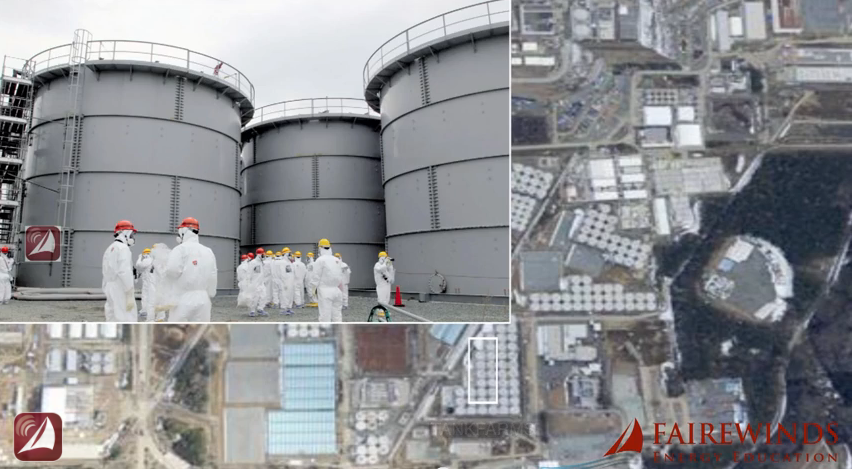
“They have a thousand tanks that are held together with a plastic pipe, so if there is a moderate earthquake the plastic pipes will fail and all that material will run across the ground surface and into the ocean,” .
He added that the health risks are great and continue to increase every year. “Somewhere between 100,000 to 1,000,000 [people] will over the next thirty years get cancer from this accident…1,000 additional cancers a year from eating fish from the Pacific.”


fredag 19. juli 2013

YOU DON’T FIGHT A WAR ON A BUDGET


"The Japanese should fight this as a war,


and you don’t fight a war on a budget"


Arnie Gundersen’s new video update is a discussion with Akio Matsumura on today’s biggest dangers at Daiichi Nuclear Power Plant in Fukushima, July 2013 

40 good years and 1 bad day..

Akio Matsumura says the accident has raised enormous issues that the world has never experienced. Tepco cannot handle this magnitude of a catastrophe alone. He has worked to make the government listen to make independent international team to go in and try solve the huge problems at Fukushima Daichii, and minimize the radiation to the Japanese people.

It does not exist today an independent organization. IAEA (International Atomic Energy Agency) claim to be that, but is also promoting nuclear power (article 2 in their charter), and that cannot be independent..

Nuclear power is big business, and today, money goes before human heath and lives.


We must continue to study and bring wisdom of international team together. Please help Japan – and the world.


The biggest dangers at the NPP (nucear power plant) today are:

1    1. An earthquake that causes the water tanks to leak.


Enormously radioactive water is stored in 700 huge tanks. They don’t let us know exactly what is in them. The decay of the radioactive material in those tanks releasing very high quantities of x rays off site.

If there is an earthquake, none of them  are seismically qualified.

Release of this into the pacific Ocean is more than what has already been released.


    2. The structural condition of nr 4.

Reactor 4 has most fuel, and hottest fuel. Loss of fuel cooling, can still lead to a fuel pool fire. This will contaminate a huge part of the country, including Tokyo. 


In my opinion that means evacuation of over 30 million people. Nothing is prepared to meet this treat, because it is looked upon as impossible.

I don’t think we are allowed to think like this.

In the Book of Exodus in the Bible,  the Israeli people was able to escape from Egypt with 2-3 mill people and loads of animals. On foot. With the transport technology we have today, we should be able to help more people out of Japan than escaped from Egypt..

Japan is a huge island. It should be surrounded by big cargo ships until this treat is under control.

But a price tag is set on human lives that the world leaders are not willing to pay.


It’s a question of economy. Neither Tepco (Tokyo Electric Company, running the plant) or the Japanese government want the Japanese people to know how much in debt this catastrophe has sat them.

The word leaders do not want people to know how dangerous this situation specifically, and nuclear power plants in general, are for the world. Even a knowledge of possible ruin and extinction of the planet is not enough to make them give up one single dollar in profit..


3     3. Unit 3

This unit has less fuel, but are much more damaged than unit 4. Therefore it has even less chance to withstand an earthquake.

A quake of 7.0 or higher at or near the site, is what we all pray will not occur in this area.

Japan is situated on several cracks in the earth’s crust, upon several tectonic plates.


Two big problems

Ground water is leaking into the reactors.

The devastating earth quake 11th of March 2011 made the entire Pacific side of Japan drop with 3 feet.. Japan sank down with 3 feet..

If you’re a building and the structure suddenly fall 3 feet, that makes the floor to crack. It puts more water pressure on the bottom of the building.

So water is flowing into the reactor buildings in great quantities, 400 TONS A DAY..


If the buildings had no radiation, it would be no problem, the water could flood anywhere.

But this water gets highly radioactive, and is contaminating ground water and ocean. There is no way they can contain all this water..


I remember how they tried.. This was the reason why the Tepco leader cry on TV..  He apologized for radioactive water leaking out in the sea..


The containment got holes in it, penetrations, where wires are going in and out, electric, and pipes.

The insulation on these penetrations was never designed for high radiation, high temperature – and salt water – no one ever THOUGHT they would be exposed to salt water. (salt breaks down structure).

All three things happened at Fukushima Daichii, and the penetrations have all failed.


 So the radioactivity that was supposed to be contained in the nuclear reactor, is now leaking through these penetrations, to where the water is leaking into the other buildings.

In that effect we have small pieces of nuclear fuel, powder, mixing in with the water and cover the floors in the reactor buildings.


You have two choices:

Either stop the water from going in, or stop the radiation from going out.

Both very difficult.

Nothing of this have ever been done before, nothing is described in any text book..


Stop the water from going in:

Gundersen proposed after the accident to build a trench around the site, and filing it with something called ciolite ( a volcanic material who absorbs radiation very well)

Another scientist, Japanese Dr Nakamura, suggested building wells outside that trench, to drop the water table. That would reduce the amount of water going into the reactor buildings.

If you could drop that water table, you could pump the water out in the ocean. The ceolite would filter the radiation and make the water clean.


Stop the radiation from going out:

The horse is already out of the barn..


But it’s still important to seal all those penetrations that are leaking – find the leaks and plug them.

Extremely high and deadly, or near deadly radiation makes this difficult..

There’s a priority to get the fuel out of those reactors.. but that high radiation makes it extraordinary difficult.

Best solution concerning the 400 tons of water going in every day, is to lower the ground water table and prevent further water to go in.


From the earliest days we knew..  that the biggest concern is that any accident at Fukushima Daichii that will cause high and lethal releases of radioactivity, will make further work on the plant impossible. It will be abandoned, and  maybe even also on the nearby plant, Fukushima Danii. This will have an impact on the whole world, especially on the northern hemisphere.

You can see Arnie Gundersen's new update video on Fukushima
"Forty Good Years and One Bad Day"   >>> HERE

All pictures in this article is from Arnie Gundersen's update video.
Get more information at Arnie Gundersen's excellent web site:
Fairewinds Energy Education


See also: "Fukushima: Unstable and a strategic disaster"